
Symposium on Innovative Malaria Elimination under “The Belt and Road Initiative” Held in Beijing
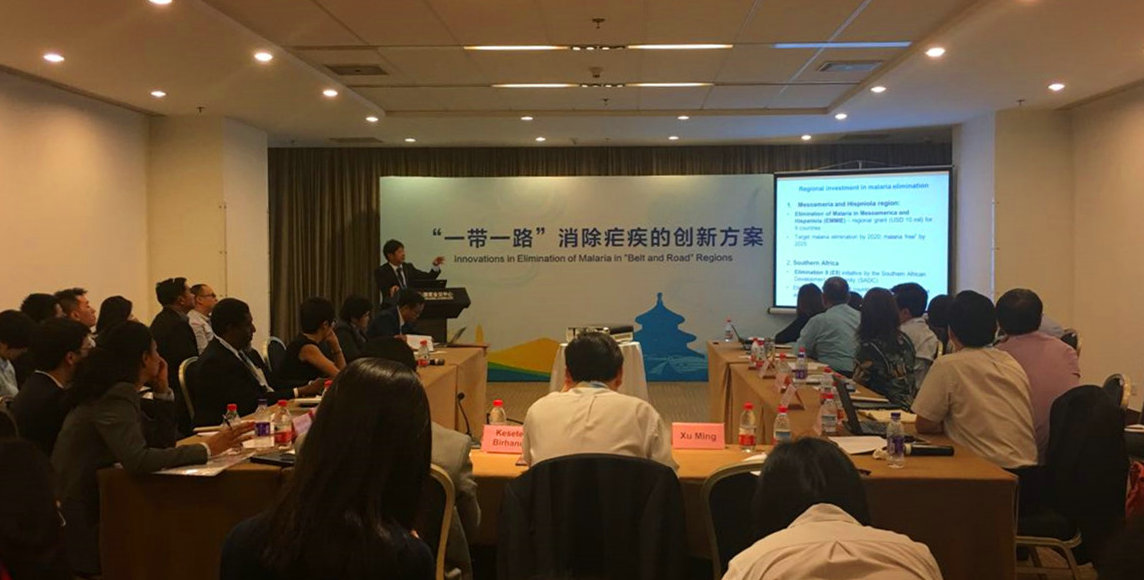
During 18-19 August 2017, A High-level Seminar on "The Belt and Road Initiative (BRI)" and "Healthy Silk Road" was organized by the National Health and Family Planning Commission (NHFPC) in Beijing. During the Seminar, a specific Symposium on Innovative Malaria Elimination under “The Belt and Road Initiative” was held in the afternoon of 18 August. More than 40 people from Myanmar Ministry of Health, Cambodian Ministry of Health, Roll Back Malaria (RBM), Global Fund, Bill & Melinda Gates Foundation (BMGF), the Tanzania Ifakara Health Institute, Peking University, National Institute of Parasitic Diseases (NIPD), Chinese Center for Disease Control and Prevention, Institute of Plant Protection, Chinese Academy of Agricultural Sciences (CAAS), Fosun Pharma, Nanjing Essence Fine-Chemical Co., Ltd., etc. attended the symposium. Dr. Kesete Admasu, CEO of Roll Back Malaria (RBM), and Mr. Yang Weizhong, Vice President of the Chinese Preventive Medicine Association (CPMA), delivered opening speeches respectively.
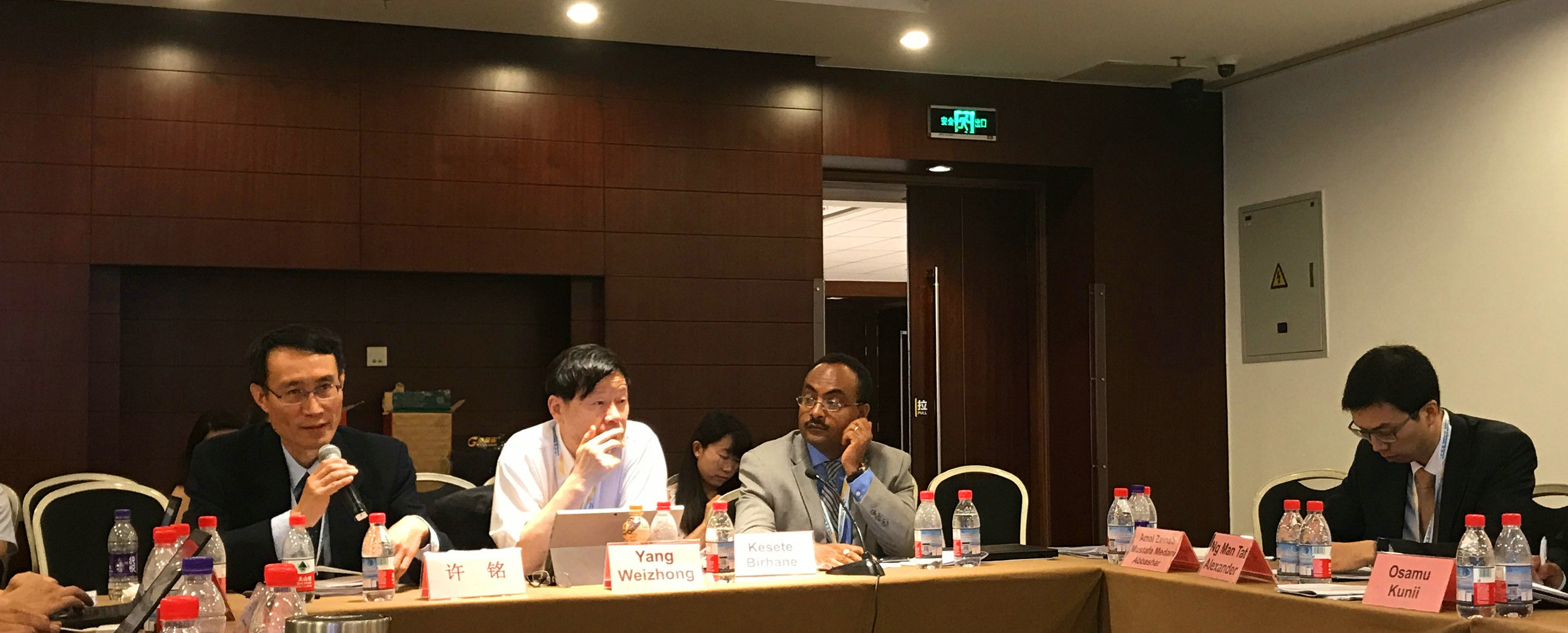
In the speech, Mr Yang introduced the current status of malaria in China and proposed four requirements for this symposium: 1) to analyze malaria elimination strategy; 2) to explore the existing challenges; 3) to promote technical exchanges; and 4) to discuss cooperation mechanism among countries along the "Belt and Road".
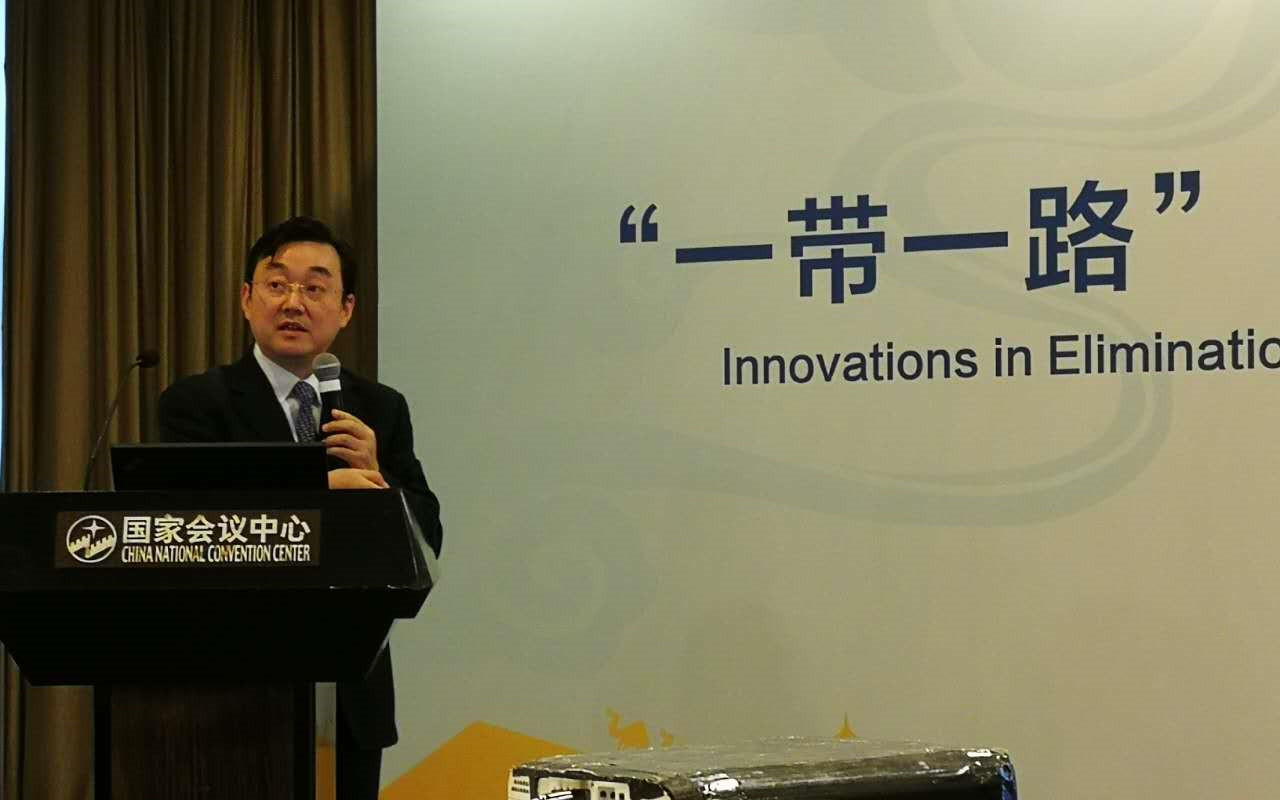
The symposium consisted of 6 main theme reports:
● Dr. Kesete Admasu made a report entitled “Global Malaria Progress and Challenges”, recalling the progress of malaria elimination in the United Nations Millennium Development Goals (MDGs) and pointing out the current challenges, including malaria coverage gaps (children with fever not taken for care, pregnant women not receiving intermittent preventive treatment in pregnancy, distribution of drug-resistant nets, etc.), resistance to insecticides, and drug resistance in the Greater Mekong Subregion (GMS). In response to these problems, RBM, as the world's largest multi-stakeholder platform, aims to roll back malaria by establishing effective partnerships, with 3 strategic priorities: 1) ensuring universal coverage of malaria prevention, diagnosis and treatment; 2) accelerating malaria elimination; and 3) transforming malaria surveillance into core intervention means. Dr. Admasu pointed out that China played a vital role in anti-malarial at the global level, especially in vector control (large-scale indoor residual spraying), national malaria projects implementation, Chinese pharmaceuticals and pesticides, and malaria elimination environments (surveillance capabilities, data innovation, standards and mechanisms, etc.).
● Dr. Zhou Xiaonong, Director of NIPD, reported on the "Acceleration of Innovations in Eliminating Malaria in the ‘Belt & Road’ Region". He introduced China's malaria control strategy at different stages and the three systematic work areas: innovative studies, project validation, and application of surveillance system. Dr. Zhou introduced the concept of Systems Thinking in malaria elimination to improve the level and effects of malaria elimination by establishing a model of the biological, environmental together with human social and behavioral factors of malaria vectors. In addition, he also introduced the progress of NIPD's Pilot Project through the tripartite China-UK-Tanzania collaboration. Using it as an empirical case, he pointed out the uniqueness of the Chinese anti-malarial project in Africa, and the advantages of the “1-3-7” Malaria Surveillance and Response Strategy in China.
● Dr. Alex Ng, Bill & Melinda Gates Foundation reported on Science and Technology Innovations to Support Malaria Elimination. He introduced its global malaria strategy- “ACCELERATE TO ZERO”. He also elaborated three major areas for malaria elimination in the GMS, Southern Africa, Hispaniola and Central America, and also emphasized that the Foundation would strengthen the health cooperation in medicines, vaccines, diagnostics and vector control together with the implementation of the BRI.
● Dr. Yuan Huizhu, Director of Institute of Plant Protection, CAAS, made a report on "The Innovation and Application of Green Insecticides", reviewed the green insecticide research and development in China and the green pesticide molecular design process, and introduced chemical management for mosquito and application of Ultra Low Volume (ULV) sprayer and Unmanned Aerial Vehicles (UAVs) to control insects. Dr. Yuan believed that China has developed many kinds of novel green insecticides, and has registered patents for mosquito control. Advantages of ULV fogging and UAV spray methods are convenient, labor saving, highly efficient, and water saving, which can promote the malaria control work.
● Dr. Osamu Kunii, Head of the Strategy, Investment and Impact Division of Global Fund, made a report entitled "International Funding for Malaria Programmes Promoting the Advances in Global Malaria Elimination". He reviewed the progress and achievements of the Global Fund in global malaria project, and its role in global malaria elimination, including direct investment in key areas such as monitoring and proactive detection of cases, vector control, reduction of cross-border cases, emergency preparedness, community mobilization, etc., as well as catalysis such as joint ventures, mobilization of government participation, and multinational cooperation.
● Ms. Huang Ling, Director of Government Affairs, Fosun Pharma, reported on "Build a Landmark of Chinese Anti-malaria Medicines in Africa", introduced its malaria control drugs and their market share. Fosun Pharma is currently working with a number of partners to participate in a series of actions and campaigns combating malaria.
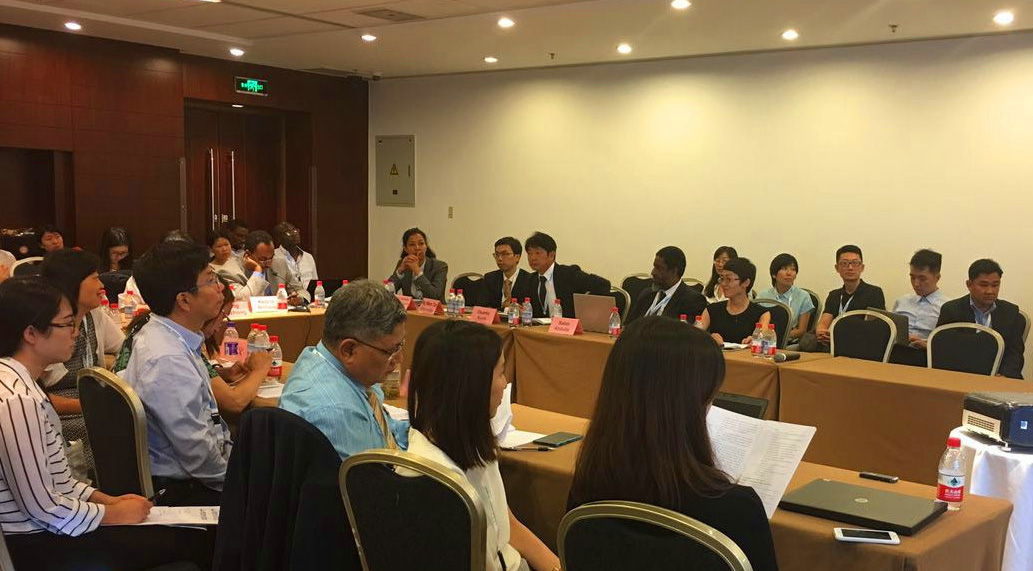
Following these reports, Dr. Xu Ming, Senior Policy Adviser to the Global Fund, and Dr. Salim Abdulla, Senior Advisor of Ifakara Health Institute in Tanzania, hosted the thematic discussion on future cooperation mechanisms. Participants discussed warmly and reached a preliminary consensus on: the way to encourage enterprises to apply for WHO's Pharmaceutical Licensing Pre-certification (PQ), how China can help other developing countries to promote health system construction, and how to establish anti-malarial pilot projects and its management.
Relevant agencies along the “Belt and Road” region exchanged ideas at the meeting on malaria elimination strategy, innovative technology, drug pre-certification and other topics concerned, which laid a good foundation for China to actively participate in and promote malaria elimination in the "Belt and Road" regions in the future.
(By Programme Implementing Agency OP4D02: National Institute of Parasitic Diseases, China CDC)

