
Going abroad deeply into community, gaining heavily through in-depth interviews
During 20-29th August 2017, a team led by Professor Fang Jing consisting of 3 teachers and 3 postgraduate students from the School of Public Health, Kunming Medical University undertook the midterm evaluation and supervision of the “Pilot Interventions to Apply Relevant Chinese Practices and Experiences to Improve the Health of Women and Children in Low-income Countries in Asia and Africa” supported by the China-UK Global Health Support Programme (GHSP).
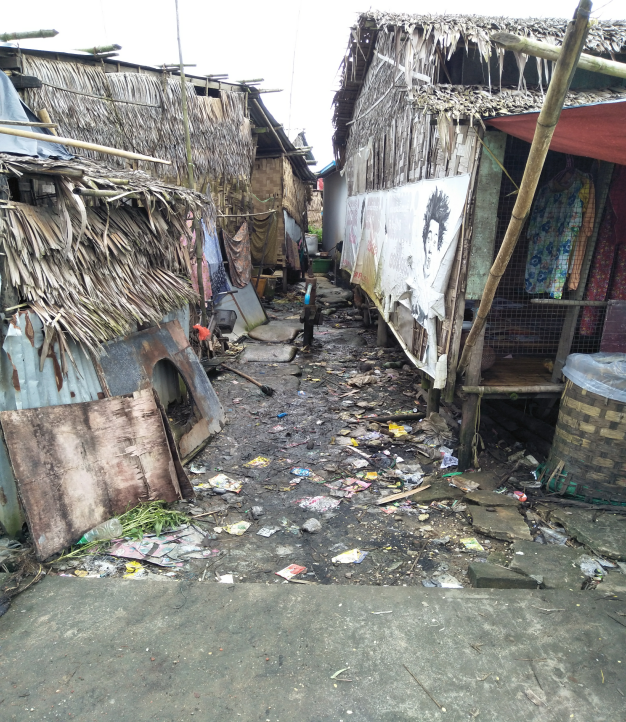
Fig 1: Slums built with bamboo and thatch in the intervention townships
The site of pilot interventions in Myanmar is Hlaing Thar Yar Township, an industrial park near Yangon. There are more than 600 factories and a lot of migrants who are working and living in this township, but the infrastructure including roads and health facilities are very poor. Many migrants live in slums with poor hygiene and sanitation. The pilot intervention includes: to raise women’s awareness of and demanding for MCH and reproductive health (RH) services and to strengthen the linkage between community and health facilities through community mobilization; to provide cash reimbursement to women to reduce the economic barrier which hinders their utilization of MCH and RH services so as to increase their accessibility to those services; and to improve the quality of MCH and RH services.
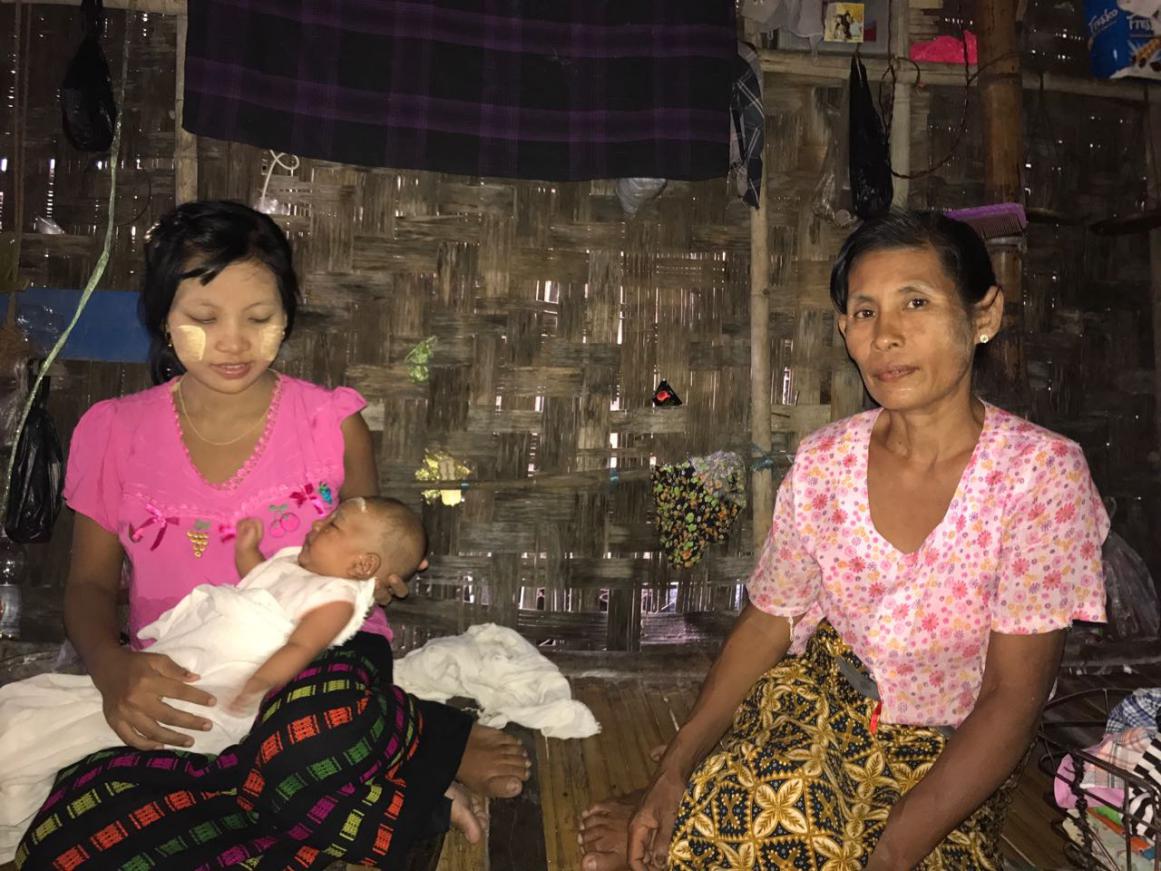
Fig 2: The evaluation team interviewed the postpartum women living in slum community at ward 1
The aim of the midterm evaluation was to know the progress of project implementation, difficulties and challenges encountered, and to explore solutions. The evaluation team first listened to the reports on the project implementation progress delivered by the project officers of MSI and then spent 5 days in 5 health facilities of the township and 4 communities interviewing 95 people including the managers of health institutions, health care providers, women and their family members, reviewing and collecting project-related existing records/data in those health facilities.
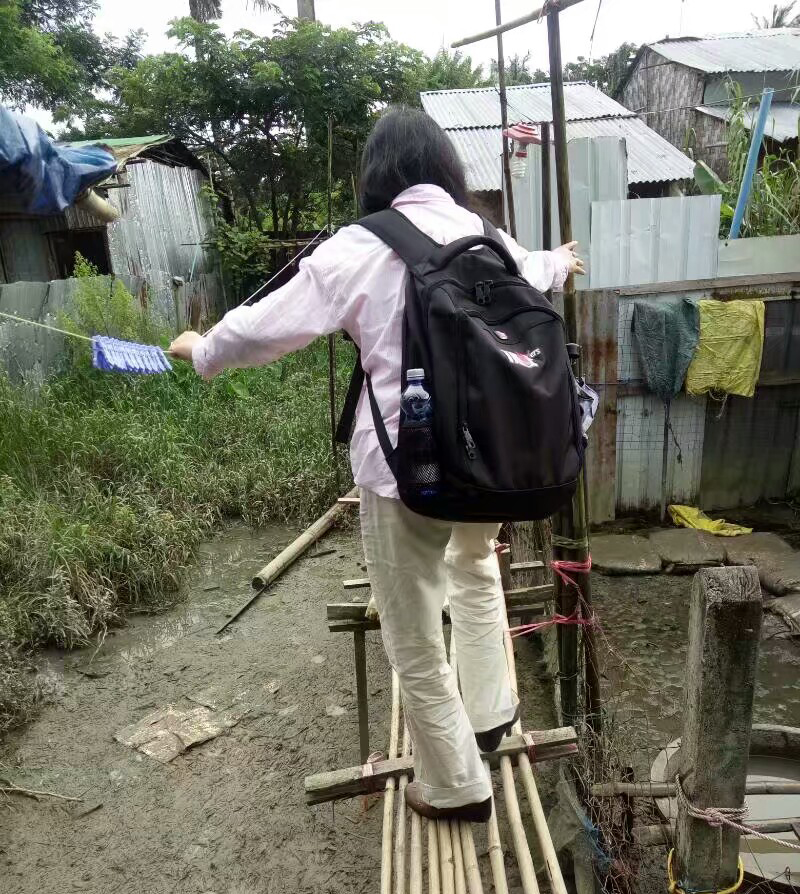
Fig 3: The evaluation team walked through simple “bridge” to the interviewee’s home
There are many slums in the townships which are built with bamboo and thatch. The population density is high, the sanitary condition is poor and most people living there are poor migrants. When the evaluation team went to two slums to interview pregnant and postpartum women at their home, usually 4-5 people sat shoulder by shoulder in a room with only 4-5 square meters, talking with women and their family members in a dark, humid environment with stifling hot air. After the interview was finished the team members were always sweating heavily. It was a raining season and many small roads in those slum areas were flooded with water, some residents used bamboo to make simple bridge to pass through. Sometimes, the evaluation team had to use the simple “bridge” to reach the interviewee’s home. It was challenging for the team to walk on the “bridge”, they had to be very careful to avoid falling into sewage water full of garbage and mud. Due to traffic jam, the team had to spend 1-2 hours travelling only around 40 kilometers to reach the township and when they came back to the city it was around 8 pm in the evening. After a quick dinner, the team still continued to transcribe the interviews notes tanked down during the day.
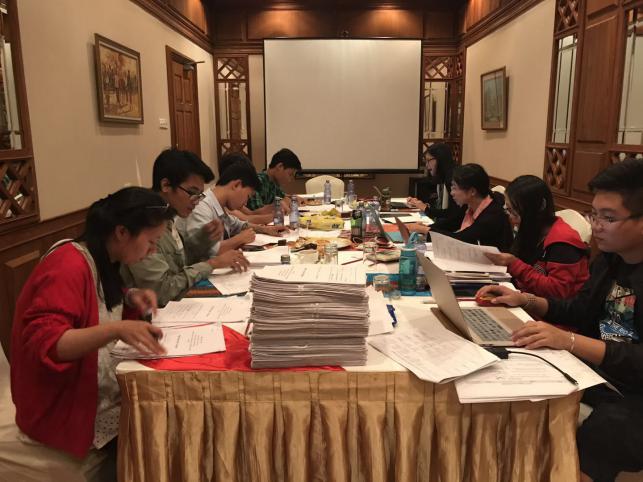
Fig 4: The evaluation team worked with the students of Professor Nay Sue Moung on questionnaire translation
For the evaluation team, the tough work environment is only one challenge, and the bigger challenge is the language barrier. As for the language barrier, the team had preparations in advance and hired three interpreters who could speak both local Myanmar language and Chinese. However, the three interpreters are not health care professionals and they are not familiar with the MCH and reproductive health terminology, therefore sometimes they could not accurately translate communication between the interviewer and interviewee. The team had to spend more time to check with the interpreters during the interview ensuring the information was correct. Nevertheless some information was still missing during the translation process. As planned, the evaluation team would bring back 307 copies of the baseline survey questionnaires collected by Professor Nay Sue Moung and his team from the Yangon University of Public Health. However, when the team got the questionnaires, they found the 307 questionnaires were all printed and filled in in pure Myanmar language without bilingual languages as agreed before. Thus the evaluation team needed to translate the Myanmar language into English or Chinese, then input the questionnaire data into a database. At the beginning, the team took the questionnaires to the field trying to check with the three interpreters and to do the translation during lunch break time. However, due to the heavy workload of interviews, the team only managed to finish the translation of a few copies during the 5 days. In order to solve this problem, Professor Fang contacted Professor Nay Sue Moung and requested him to send personnel to help with the translation. After 5-day field work completed, the team spent 1.5 days and one whole night working together with 4 students from the Yangon University of Public Health to do the translation: the 4 students from Myanmar were responsible for the translation and the evaluation team members were responsible for checking. In this work, both sides used the third language of English, and when the 4 students encountered some description in the questionnaires they didn’t understand, they discussed with the team to make sure the meaning is correctly noted. Due to the limited time and the heavy workload, the joint team had no time to eat ate biscuit and instant noodles without lunch. Under the joint efforts of both sides, all the translation and check were completed just 4 hours before the departure time of the evaluation team back to Kunming.
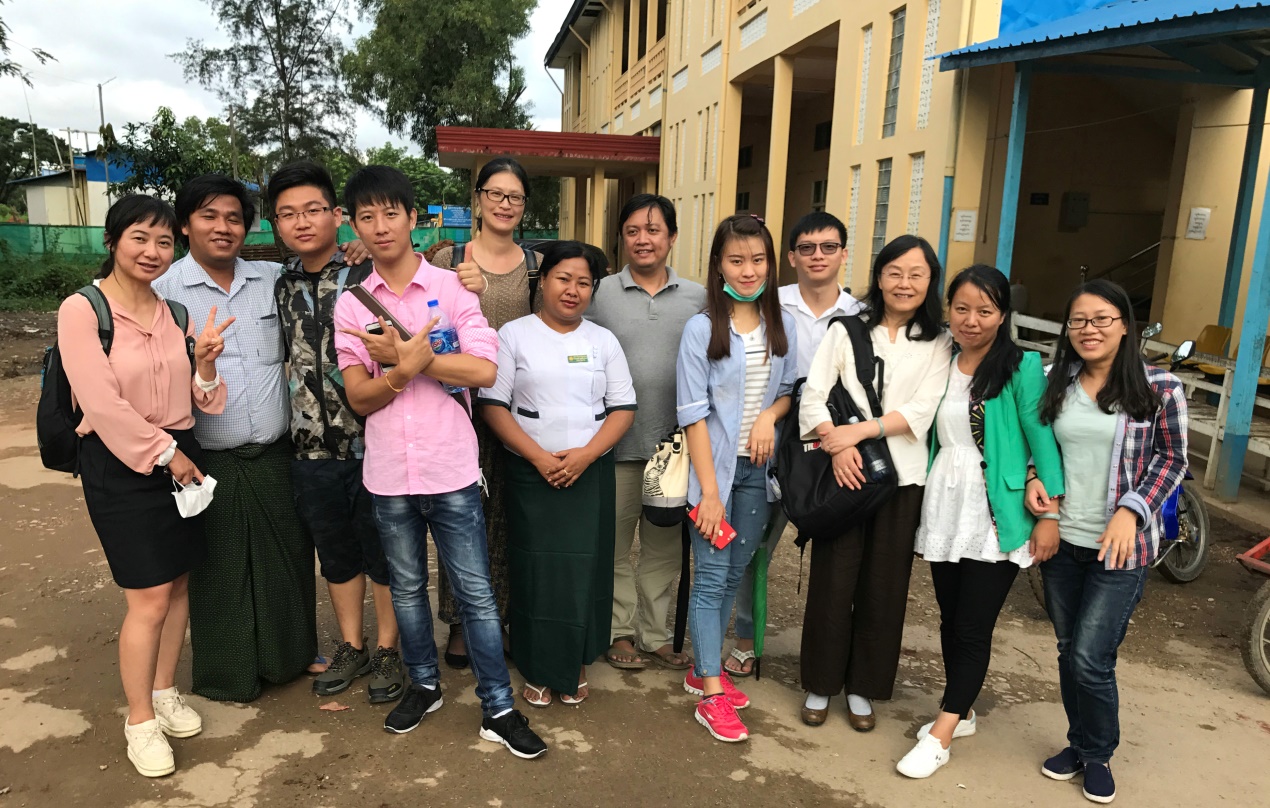
Fig 5: The evaluation team members and local project personnel
The midterm evaluation provided a good opportunity to allow the researchers and students from Kunming Medical University to go into deeply the grassroots level of the pilot township in Myanmar and to understand the situation of MCH and RH service provision as well as women’s needs for those services. More importantly, this evaluation allowed the team to have the “real” experience of undertaking international health aid and research in other country.
This project is the first overseas MCH/RH pilot intervention in a developing country and is also a project jointly conducted by Chinese universities and an international NGO, which is different from sending a medical team, one of the conventional ways of international health aids undertaken by Chinese government. To undertake this kind of health aid, there is an urgent need for researchers to understand local needs and to design intervention based on those needs, which will be followed by implementation and evaluation. Therefore, those who are interested in international health aid need to do preparations in advance: firstly, they should be able to tolerate hard working environment and can adapt to the difficult situation and highly intense work; Secondly, they need to prepare to face sudden problems and can quickly and flexibly solve them; the last and more important thing is to be able to learn local language and culture. Learning local language and understanding local culture can allow us to better communicate with local people, so that can better understand their real needs, and also collect more accurate information to design more targeted interventions.
For international health aid, the preparation of technology and funds is necessary, but not sufficient, and we must have a hard-working spirit and learn the local language and culture well. The experience and lessons learned in the implementation of this project will be a valuable wealth and useful reference for China to carry out similar bilateral and multi-bilateral international cooperation to help other developing countries to improve the people’s health in future.
Background
Overseas Pilot Project on Maternal and Child Health in Myanmar and Ethiopia supported by GHSP with the duration from June 2015 to June 2018 is conducted by The Global Health Institute of Fudan University, with the collaboration of Kunming Medical University in charge of conducting the baseline survey, project supervision and evaluation. The expected goals are as follows:
◆ Apply the evidence-based successful experience of China, carry out intervention activities for reproductive, maternal, neonatal and child health (RMNCH) in two pilot areas in Myanmar and Ethiopia, to increase utilization of RMNCH services, thus improve the health of women and children.
◆ Explore experience, lessons and effective models from health development cooperation between China and other developing countries through pilot projects, especially the feasibility of implementing tripartite cooperation project with the international non-governmental organizations (NGOs).
(By Programme Collaborating Agency OP4V01: Kunming Medical University)

